
Kerr County VINE Coverage
The Kerr County Sheriff’s jail page points users to Texas Statewide VINE and gives 877-894-8463. Historically, county VINE allowed a user to find one county-jail record and request notice of release, transfer, escape or recapture, death in custody, and participating court events. It was built for notification, not for a permanent release history.
Texas changed this system on September 1, 2025. TDCJ Victim Services and the Texas Attorney General launched IVSS Counties to connect county custody and court notices with post-conviction IVSS when a person is sentenced to TDCJ. Kerr County’s completed onboarding was not verified. Open both current systems, select Texas, and confirm that Kerr appears before relying on coverage.
For TDCJ prison, parole, or mandatory-supervision events, use Texas IVSS. VINE does not cover BOP federal custody. ICE and USMS also require their own channels.
The official KCSO jail page shown below preserves the local VINE referral. Review the Kerr County Jail notification link before starting.
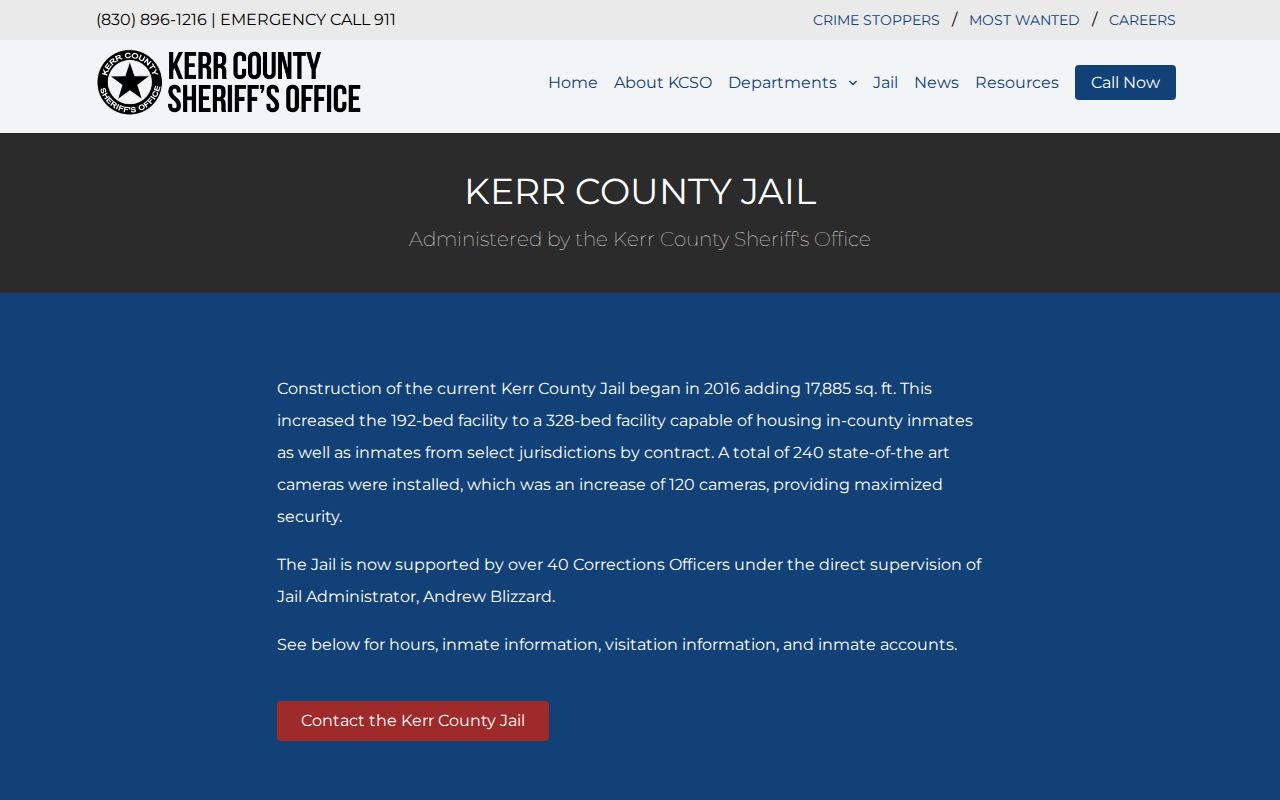
The county referral establishes the local notification path, while the live VINE or IVSS interface establishes current availability.
Search Kerr County on VINELink
Start at VINELink for a county-custody inquiry. A one-person search requires a careful match. A common name alone is not enough, and a no-result can mean a spelling difference, nonparticipation, system transition, or record purge.
- Select Texas and determine whether Kerr County is available or whether the interface directs county events to IVSS Counties.
- Enter the full name and any identifier the current interface accepts. Try documented spelling variants only when needed.
- Compare the agency, facility, identifiers, and descriptors before opening a result. Do not merge similar people.
- Open the person’s details and read the exact custody-event label. Release, transfer, discharge, and escape are different events.
- Save the source, search time, identifiers used, and event wording. Confirm a legal or documentary need with KCSO or the relevant agency.
The VINELink Texas selection screen pictured below shows the official starting point. Open the live VINELink interface because state routing can change.
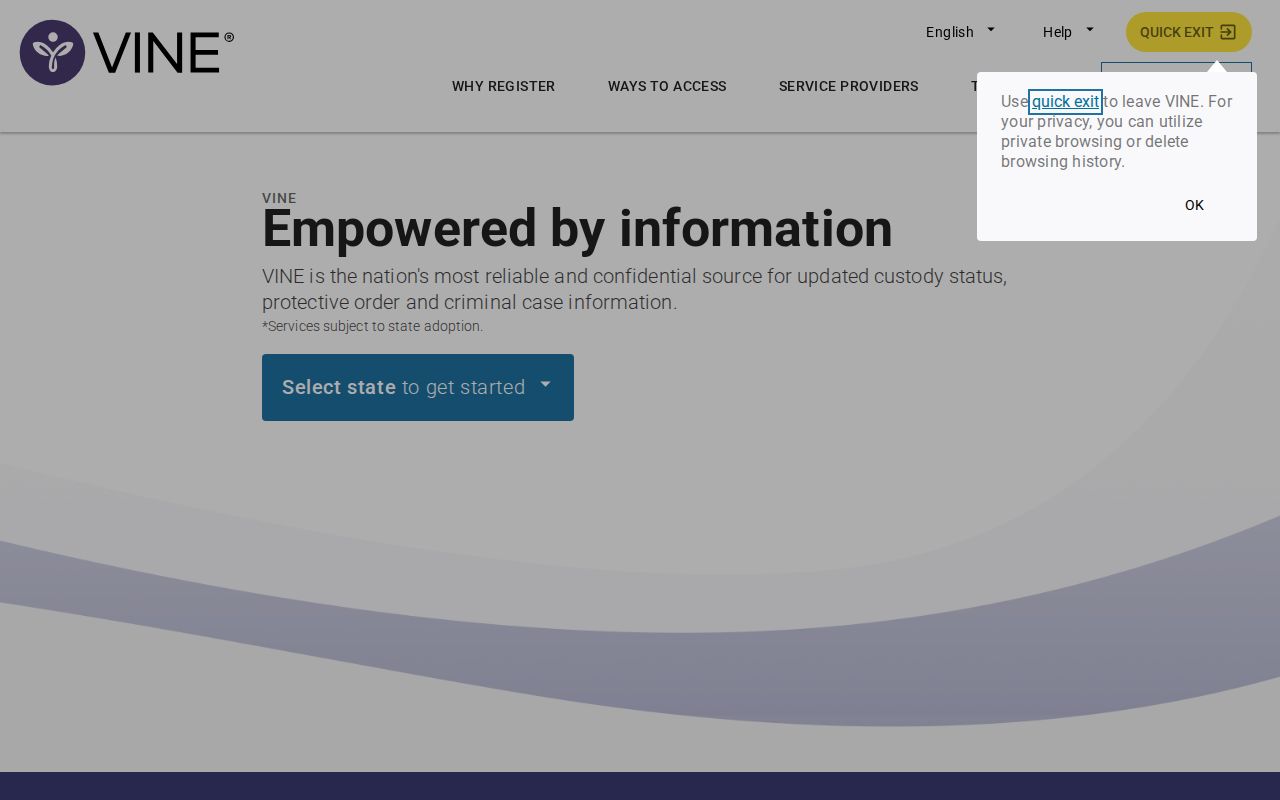
The state selection is only the first step; Kerr availability and the person’s exact agency match must still be confirmed.
Kerr VINELink Release Event Fields
Fields vary by participating agency and platform. Read what the live record actually displays. Never convert a transfer into community release or a projected date into an event that already happened.
| Field or event | What it can establish |
|---|---|
| Name and offender identifier | Supports the identity match when checked with the agency and other descriptors. |
| Custody status | Reports the status transmitted by the participating source at that time. |
| Agency or facility | Identifies the custodian associated with the record. |
| Release or release to supervision | Reports that the source transmitted that event; the exact legal form still matters. |
| Transfer or return | Signals movement or renewed custody, not release to the community. |
| Discharge | May indicate the end of the TDCJ sentence or supervision obligation under that agency’s terminology. |
| Parole review, decision, or warrant | Describes a supervision process or event and does not itself prove physical release. |
A VINE or IVSS notice is strong evidence that the participating source sent a change. Obtain the KCSO or TDCJ record when exact release time, legal proof, or a lasting record is needed. The Kerr County release search and records path explains how to reconcile jail, court, state, federal, and immigration sources.
Register for Kerr Release Alerts
Register while the person is in custody. The service is prospective and is not a way to order an old release record. Available methods depend on the live system. Legacy VINE supported web, mobile, and toll-free registration by phone, email, text, TTY, or another offered channel.
- Select the verified person’s record and choose notification or registration.
- Choose the available delivery channels and enter the phone number, email address, or other destination carefully.
- For automated telephone notices under the legacy flow, choose and retain a four-digit PIN.
- Complete any email or text confirmation shown. When a phone alert arrives, enter the PIN so the system records receipt.
- Keep the registration current and confirm any alert with the custodian named in the notice.
For TDCJ events, search IVSS by name, SID, or current TDCJ number. The official one-person search help explains wildcard use and the “View Details” step. Registration may offer email, letter, text, or phone notices about review, decision, release to supervision, discharge, return, and warrant activity. Registration is confidential.
VINELink support is 866-277-7477. TDCJ Victim Services is 800-848-4284 and victim.svc@tdcj.texas.gov for IVSS questions.
Confirm Kerr VINELink Release Alerts
A notification system depends on data sent by the participating agency. Transmission and display can lag. The exact event label matters. Release to parole or mandatory supervision means TDCJ custody continues as community supervision; discharge generally means the legal obligation ended. A county transfer may mean the person remains confined elsewhere.
Confirm a Kerr jail event through the jail clerk at 830-896-1257 and, when needed, a KCSO booking and release record. Confirm a TDCJ event through the offender record, IVSS, release documentation, or the Parole Division. A projected TDCJ release date is not proof of actual exit.
Legacy Texas guidance said county offender records were not retained beyond 90 days after release. That warning shows why VINE is not a historical archive. A no-result does not contradict a documented old release. Use a written KCSO request and the Kerr court case for history.
Kerr VINE and IVSS Transition
KCSO locally points to Texas Statewide VINE, yet Texas began IVSS Counties in 2025. The new layer is intended to connect county custody and court notices with later TDCJ events. No authoritative source confirmed that Kerr County had finished onboarding when the research was completed.
The practical response is to check both systems. Confirm Kerr is selectable in the live county interface. If a Kerr case results in commitment to TDCJ, search current IVSS and verify that notification registration continues. Do not assume a legacy county subscription migrated automatically.
Use the current TDCJ IVSS portal shown below to verify the post-conviction path.
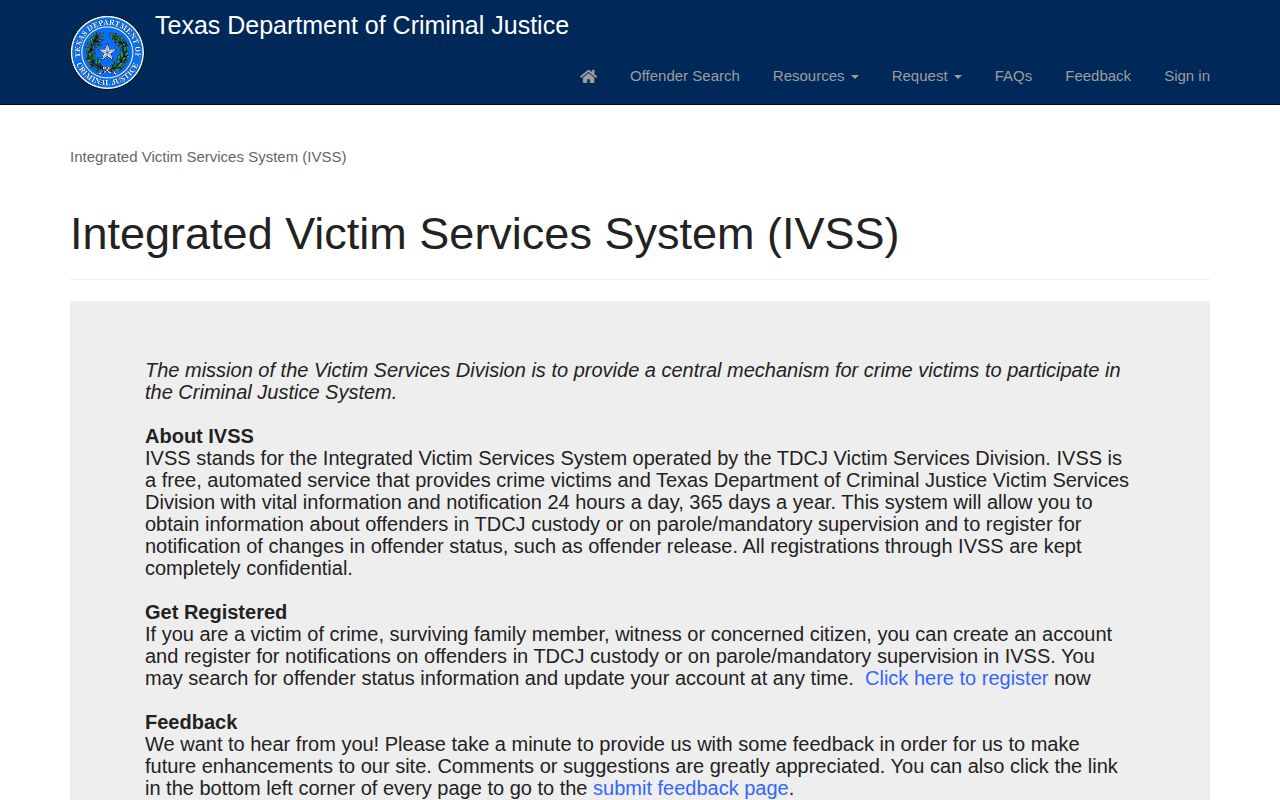
The IVSS portal covers TDCJ prison and supervision events; current county integration must be confirmed within the live service.
Kerr VINELink No-Result Checks
A negative result has several possible meanings. The person may be under a different spelling, Kerr may not be active in that interface, the county platform may be transitioning, or a released legacy record may have aged out. The person may also be in TDCJ, BOP, ICE, another county, or no longer in custody.
Classify the original custody before choosing the next source. For a Kerr booking, call KCSO and request the release entry. For a TDCJ sentence, search by TDCJ number or SID and use IVSS. For federal custody, use BOP. If an ICE handoff is documented, use ICE’s locator within its current and recent scope. A no-hit is not a release certificate.
The Texas DPS registry is limited to people with a Chapter 62 duty. It may corroborate community registration for a qualifying person, but it cannot establish the Kerr jail release time or apply to all released people.
Keep notifications in context. A notice can be preserved with its timestamp and source label, but a durable documentary request should go to the agency that held the person. For Kerr County Jail, request the booking and release entry from KCSO. For TDCJ, request the release certificate or other existing record through the appropriate TDCJ channel. The notification supports the timeline; the originating record supplies the formal details.
Identity checks remain essential. Compare the offender number, agency, case or county, and available descriptors. A registry or VINE name match by itself can point to the wrong person. When a system supplies fewer identifiers, call the responsible agency and provide only the information needed to resolve the match.
Kerr TDCJ Notification Events
IVSS can cover parole review and decision, release to supervision, discharge, return, and warrant events for a person in the TDCJ system. These labels represent different stages. A parole decision allows later processing but does not itself open the gate. Release to supervision means the person remains under Parole Division authority in the community. Discharge is a later legal endpoint under the agency’s terminology.
Search with a current TDCJ number or SID when available. Name searches can collide. Match the county, court, offense, and case information before subscribing. If the person only had a Kerr bond release, county probation, or a short county sentence and never entered TDCJ, the state-prison IVSS route may have no record. Use KCSO and the Kerr court system instead.
A later warrant or return event can coexist with a valid earlier release alert. It does not erase the first event. Read the sequence in time and verify the new custody with the agency responsible for the warrant or return.
Keep each alert tied to its stated agency, event type, and transmission time. That context prevents a later status from being mistaken for the original Kerr County release.
Public Record Search
Sponsored Results